
Introduction
What is SEO and how does it work? A Complete Guide for Beginners Search Engine Optimization (SEO) helps websites improve their presence in search engine results and connect with people looking for relevant information. When users search on Google, they often explore the results to find answers, compare products, discover services, or solve problems. For businesses, appearing in relevant search results creates opportunities to reach potential customers.
SEO plays an important role in digital marketing by helping websites attract visitors who are interested in their content, products, or services. Whether you manage a small business, run an online store, or publish blog articles, applying suitable SEO techniques can help people discover your website.
Learning about SEO can help businesses strengthen their online presence, establish credibility, and connect with their target audience. In this guide, we will explain the meaning of SEO, how search engines operate, the different types of SEO, and practical methods for improving your website’s search visibility.

What Is SEO?
Search Engine Optimization (SEO) is the process of improving a website so search engines can understand its content and show relevant pages to people searching for related information. If you’re wondering what is SEO and how does it work, it involves making your website more useful, accessible, and relevant to your target audience.
When someone searches for a topic on Google, the search engine displays results that may answer their query. Effective SEO helps your website become more relevant to these searches and improves its chances of appearing in organic results.
For example, imagine that you own a small bakery in Kochi. When someone searches for “best bakery in Kochi” or “fresh birthday cakes near me,” you would want your website to appear among the relevant results. Optimizing your website, publishing useful content, and maintaining accurate business information can help potential customers discover your bakery.
SEO differs from paid advertising. Businesses pay for eligible placements through search ads, while organic SEO focuses on gaining unpaid visibility. Although a strong SEO strategy can improve your chances of appearing in search results, no technique can guarantee a particular ranking. Search engines consider many factors, and positions can change over time.
How Does SEO Work?
To understand how search engine optimization works, it helps to know how search engines discover, evaluate, and organize webpages. These processes generally involve three stages: crawling, indexing, and ranking.
1. Crawling
Search engines use automated programs, often called crawlers or bots, to discover new and updated webpages. These programs follow links to find additional content across websites.
For example, when you publish a new blog post, a search engine may discover it through your XML sitemap, internal links, or links from other websites.
You can support website crawling by maintaining a clear site structure, using descriptive internal links, and submitting an accurate XML sitemap. Broken links, technical errors, and incorrect crawling instructions may prevent some pages from being discovered.
2. Indexing
After discovering a webpage, a search engine analyzes its information and determines whether it should be stored in its index. This process is known as indexing.
During this stage, search engines process elements such as text, images, headings, and other page information. They may also consider whether the page is accessible and useful to searchers.
Not every discovered page is automatically indexed. Duplicate content, technical restrictions, and pages with limited value may affect inclusion.
Website owners can use Google Search Console to review indexing status and identify possible problems.
3. Ranking
When someone enters a search query, the search engine organizes results based on which pages it considers most relevant and helpful.
Search engines evaluate various signals, including relevance, content quality, usability, accessibility, and the context of the search.
For instance, someone searching for “how to improve website speed” may benefit more from a detailed guide explaining practical performance improvements than from a page that only briefly mentions the topic.
Understanding SEO ranking factors can help you create helpful content, improve your website structure, and provide a better user experience. These improvements help search engines interpret your pages while making information easier for visitors to find. However, rankings depend on multiple factors, so no single SEO technique guarantees a top position.
By learning what is SEO and how does it work, website owners can make informed decisions about content, technical improvements, and their overall search engine optimization strategy.
Why Is SEO Important for Businesses?
Understanding what is SEO and how does it work can help businesses recognize how search engine optimization supports online growth. SEO can improve website visibility, attract relevant visitors, build trust, and support long-term marketing goals.
1. Increases Website Visibility
A website that appears for relevant search queries has more opportunities to be discovered by potential customers. SEO helps businesses improve their presence in search results and connect with people searching for their products or services.
2. Attracts Relevant Visitors
SEO is not just about increasing website traffic; it also helps attract people who are interested in your offerings. When you understand what is SEO and how does it work, you can create content that matches the needs and questions of your target audience.
For example, a digital marketing freelancer who publishes an article about SEO for small businesses may attract business owners looking to strengthen their online presence.
3. Builds Trust and Credibility
People often look for reliable information before making decisions. Helpful articles, accurate business details, clear service descriptions, and a professional website can strengthen your credibility.
Appearing in relevant organic search results can also help potential customers discover your brand while researching a topic.
4. Supports Long-Term Marketing Efforts
Paid advertisements can generate traffic while a campaign is running. SEO can continue attracting visitors over time when your content remains useful, relevant, and competitive.
Results usually take time, and rankings can change. Regular content updates, technical maintenance, and ongoing improvements are important for maintaining SEO performance.
5. Helps Small Businesses Compete Online
SEO enables smaller companies to reach relevant audiences by targeting useful search terms and the locations they serve. For example, a local photography business might create a page about wedding photography services in its area.
By understanding what is SEO and how does it work, small businesses can make more informed decisions about their website content and improve their opportunities to reach potential customers.
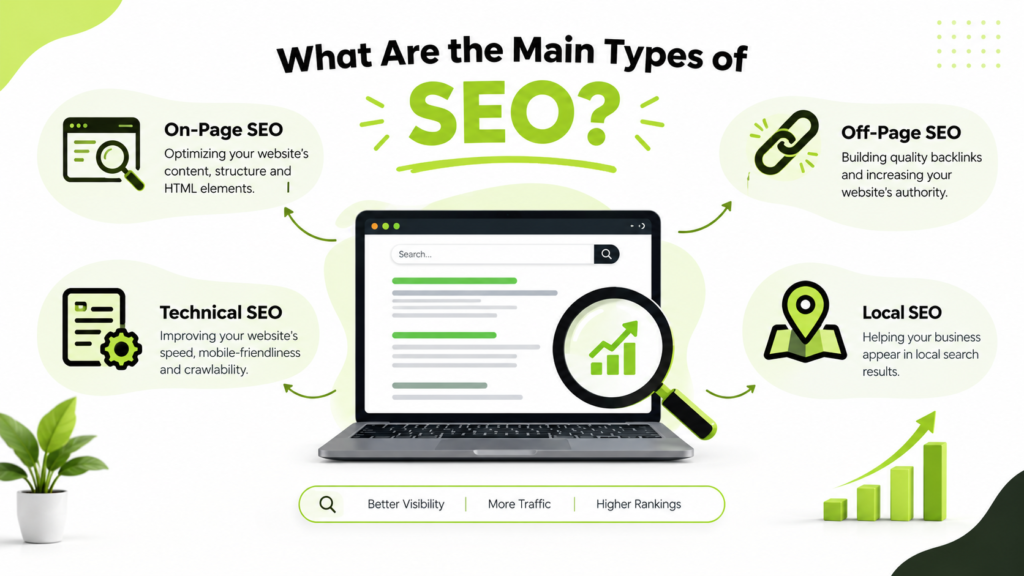
What Are the Main Types of SEO?
SEO includes several areas that work together to improve a website’s search performance.
1. On-Page SEO
SEO focuses on refining each webpage’s text, headings, titles, and other visible or behind-the-scenes elements to make the content more relevant and easier to understand.
Important practices include:
- Keyword research: Discover the words and phrases potential customers type into search engines when looking for information related to your business.
- Title tags: Write clear page titles that describe the main topic.
- Headings: Organize information using logical headings and subheadings.
- Meta descriptions: Create useful summaries that may encourage searchers to visit your page.
- Internal linking: Connect related pages to help users and search engines navigate your website.
- Image optimization: Use descriptive file names, suitable image sizes, and meaningful alternative text where appropriate.
- Content quality: Provide accurate, original, and useful information that addresses the reader’s needs.
For example, a blog about SEO should explain the topic clearly, use relevant phrases naturally, and organize the information into sections that are easy to follow.
2. Off-Page SEO
Off-page SEO refers to activities outside your website that can influence its reputation and visibility.
One important aspect is earning backlinks, which are links from other websites to your content. Relevant links from trustworthy websites can help search engines understand your site’s reputation.
You can work toward earning quality backlinks by publishing original research, creating helpful resources, contributing expert insights, and building genuine industry relationships.
Other activities, such as brand mentions and digital public relations, can also support awareness of your business. Avoid buying links or participating in manipulative link schemes, as these practices can violate search engine spam policies.
3. Technical SEO
Technical SEO focuses on making your website accessible, understandable, and efficient for search engines and visitors.
Common areas include:
- Improving page loading performance.
- Making sure your website displays correctly and remains easy to navigate on smartphones and tablets.
- Using HTTPS to secure website connections.
- Fixing broken links and unnecessary redirect chains.
- Creating a logical website structure.
- Maintaining an accurate XML sitemap.
- Reviewing crawling and indexing settings.
- Using structured data when it accurately describes the page.
A technically sound website gives search engines a better opportunity to discover and process your content. It also helps visitors navigate the site more comfortably.
4. Local SEO
Local SEO helps businesses improve their visibility in searches connected to a particular location.
It is especially valuable for restaurants, clinics, salons, shops, freelancers, and other businesses serving customers in specific areas.
Useful local SEO practices include maintaining an accurate Google Business Profile, keeping contact details consistent, selecting relevant business categories, collecting genuine customer reviews, and creating helpful location-specific website content.
For example, a freelance digital marketer serving businesses in Kochi could develop a service page explaining the digital marketing services available to local companies.
Local rankings can depend on factors such as relevance, distance, and prominence, so accurate information alone does not guarantee a leading position.
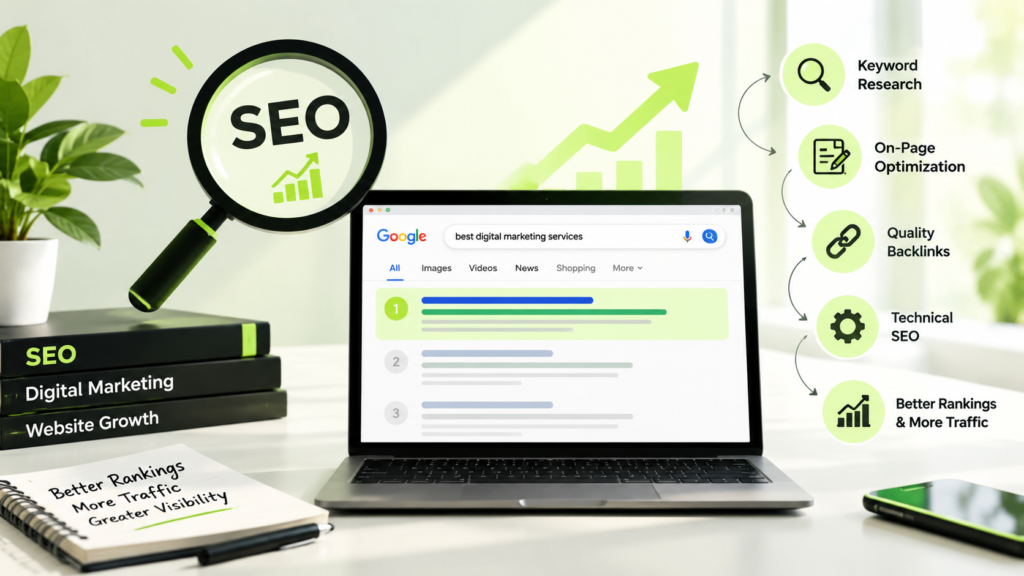
How to Choose the Right SEO Keywords
Understanding what is SEO and how does it work starts with learning how to choose relevant keywords. Keyword research reveals the phrases potential customers use online, helping you create content that matches their interests and search intent.
Start by identifying the main subject of your page. Then explore related searches, common questions, and specific phrases your audience might use.
For example, a blog explaining what is SEO and how does it work could target the primary keyword “what is SEO” while naturally including related terms such as “how SEO works,” “SEO for beginners,” and “types of SEO.”
Consider these steps when selecting keywords:
- Understand your audience: Identify your target customers and the questions they ask.
- Use keyword research tools: Discover search phrases that match your audience’s interests and needs.
- Review search results: Examine existing results to understand what information users expect.
- Check search volume and competition: Use reliable keyword data when available to assess potential opportunities.
- Choose relevant terms: Focus on keywords related to your website’s services, topics, and expertise.
- Optimize your content naturally: Include your primary keyword in the page title, introduction, suitable subheadings, and relevant sections where it makes sense.
When learning what is SEO and how does it work, remember that keyword optimization should support the reader rather than interrupt the flow of your writing. Repeating the same phrase excessively can make content difficult to read and may go against search engine spam policies.
The main goal of keyword research is to understand what your audience wants to know and create useful content that answers their questions.
How to Improve Your Website’s SEO
If you are learning what is SEO and how does it work, start by applying a few practical techniques to improve your website’s visibility and attract relevant visitors.
Publish useful content: Create articles that answer your audience’s questions and offer practical information they can use.
Optimize existing pages: Review page titles, headings, internal links, and content readability. Update older information to keep your pages accurate and relevant.
Improve website performance: Check mobile usability, page loading speed, and navigation. A website that works smoothly across devices provides a better experience for visitors.
Use Google Search Console: Monitor search queries, impressions, clicks, indexing status, and possible technical issues. These insights can help you identify areas that need improvement.
Build relevant links: Publish original, valuable content that other websites may find useful enough to reference. Relevant backlinks can help strengthen your website’s authority.
Track results: Measure organic traffic, keyword performance, conversions, enquiries, and other business outcomes. Rankings alone cannot determine whether your SEO activities are delivering meaningful results.
Be patient and consistent: SEO improvements may take weeks or months to become noticeable, depending on your website, competition, and optimization efforts. Review your progress regularly and adjust your approach when necessary.
Understanding what is SEO and how does it work also means recognizing that successful optimization requires ongoing attention rather than a single round of changes.
Common SEO Mistakes to Avoid
Several mistakes can reduce the effectiveness of your SEO efforts.
One common issue is creating content without considering what readers want to find. Copying material from other websites instead of providing original insights can also limit your content’s value.
Other problems include neglecting mobile users, overlooking technical errors, writing misleading page titles, acquiring unnatural backlinks, and expecting immediate results.
Avoid creating several pages that target the same search intent without a clear purpose. Similar pages may compete for visibility and make it harder for visitors to find the information they need.
When learning what is SEO and how does it work, focus on building a clear content strategy, sharing accurate information, maintaining your website, and evaluating performance with reliable data.
By following these practices and avoiding common mistakes, you can build a stronger SEO foundation and improve your website’s chances of reaching the right audience.
Conclusion
Search Engine Optimization (SEO) is an important part of digital marketing because it helps websites become more visible in search engine results. Understanding what is SEO and how does it work can help website owners make informed decisions about their content, website structure, and technical improvements.
On-page SEO, off-page SEO, technical SEO, and local SEO all contribute to an effective optimization strategy. Choosing relevant keywords, publishing helpful content, improving website usability, and monitoring performance can gradually strengthen your online presence.
SEO is not a one-time task or a guaranteed way to reach the top of Google. It requires continuous learning, useful content, and regular improvements to keep your website relevant to your audience.
Whether you are a small business owner, blogger, or freelance digital marketer, learning how SEO works can help you reach the right audience and create better opportunities for online growth.
Want to improve your website’s online visibility? Start by reviewing your website, researching relevant keywords, and creating content that answers your audience’s questions. If you need professional support, consider working with a digital marketing specialist to develop an SEO strategy that aligns with your business goals.
Author: krishnendu.k